Perlindungan Generator: Jenis Kerusakan & Perangkat Perlindungan Esensial
Jenis Kerusakan Generator dan Perangkat Perlindungan
Kerusakan Generator Umum
Kerusakan generator biasanya diklasifikasikan menjadi kerusakan internal dan eksternal; kerusakan internal adalah karena masalah dalam komponen generator dan kerusakan eksternal adalah karena kondisi operasi abnormal dan gangguan pada jaringan eksternal.
Gangguan pada prime mover (Prime mover adalah komponen yang digunakan untuk mengemudikan generator dan dapat berupa mesin pembakaran (kasus set generator diesel), turbin gas, turbin uap, turbin angin dan turbin hidrolik) dan sistem terkait tidak akan dibahas, karena biasanya ditentukan pada tahap desain mekanis peralatan.
Namun mereka harus diintegrasikan dalam perlindungan generator untuk tujuan trip.
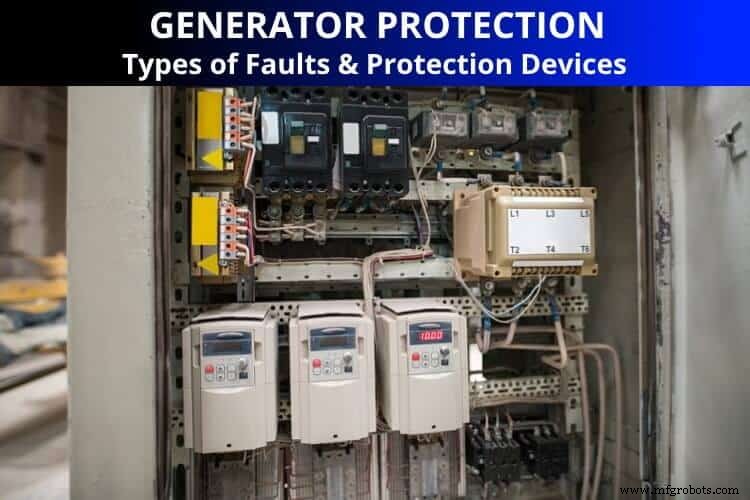
Jenis Kerusakan Internal dalam Generator
Kerusakan internal dapat berupa listrik atau mekanis
1. Kerusakan Stator
- Panas berlebih pita
- Kerusakan fasa-ke-fasa pita
- Kerusakan fasa-ke-earth pita
- Kerusakan antar-putaran
2. Kerusakan Rotor
- Kerusakan earth
- Singkatan pita (rotor luka)
- Panas berlebih
3. Kehilangan Medan / Stimulasi (The medan in an AC generator consists of coils of conductors within the generator that receive a voltage from a source (called stimulasi) and produce a magnetic flux).
4. Generator Out-of-Step
5. Operasi Motor
6. Panas berlebih Bearing dan Kurangnya Tekan Oli Pelumas
7. Getaran
Panas berlebih pita stator dapat disebabkan oleh beban permanen berlebih dan kerusakan fasa-ke-fasa dan earth adalah karena pencahayaan isolasi.
Singkatan pita rotor mengakibatkan peningkatan arus stimulasi dan penurunan tegangan stimulasi.
Panas berlebih rotor adalah konsekuensi dari arus tidak seimbang pada stator, karena:
- Trip satu kutub
- Kerusakan pita stator
- Urutan fasa negatif
Urutan fasa negatif dan arus tidak seimbang dalam arus stator dan menghasilkan flux armatur berputar berlawanan arah dengan rotor, menginduksi eddy currents di massa rotor.
Eddy currents ini, yang berada pada dua kali frekuensi sistem (50Hz atau 60 Hz), akan menghasilkan panas berlebih lokal di periferi rotor yang dapat menyebabkan kelemahan pada penahan dan cincin rotor.
Saat generator kehilangan stimulasi (atau medan), daya reaktif mengalir dari sistem listrik ke generator. Generator kemudian kehilangan sinkronisasi dan berjalan sebagai generator induksi, di atas kecepatan sinkron.
Di atas kecepatan sinkron rotor akan mulai osilasi dalam upaya mengunci sinkronisasi, menghasilkan panas berlebih dan kerusakan lainnya. Selama sistem stabil, daya reaktif (MVAr) akan mengalir ke generator dan mesin akan terus mengeluarkan daya aktif (MW).
Operasi motor generator dapat terjadi saat pasokan uap atau air ke turbin gagal dan generators menarik daya dari sistem listrik.
Dalam turbin uap uap bertindak sebagai pendingin, memelihara daun pada suhu konstan. Kegagalan pasokan uap dapat menyebabkan panas berlebih daun. Pada beberapa mesin peningkatan suhu sangat rendah, dan motoring dapat ditoleransi selama waktu yang lama.
Turbin hidrolik akan memiliki cavitation (pembentukan dan implosi segera dari rongga dalam cairan – zona bebas cairan kecil (“gelembung“) – yang merupakan konsekuensi dari gaya yang bekerja pada cairan).
Ini biasanya terjadi saat cairan diberlakukan perubahan tekanan yang cepat yang menyebabkan pembentukan rongga di mana tekanan relatif rendah.
Cavitation adalah pabab aus yang signifikan. Saat memasuki area tekanan tinggi, gelembung cavitation yang implos pada permukaan logam menyebabkan stres siklus melalui implos berulang, menghasilkan kelelahan permukaan logam.
- Postingan Terkait: Semua tentang Sistem, Perangkat dan Unit Perlindungan Listrik
Jenis Kerusakan Eksternal dalam Generator
Kerusakan Sistem Listrik Eksternal dan Kondisi Operasi Abnormal adalah:
- Kerusakan singkatan eksternal
- Koneksi generator tidak sinkron
- Out-of-step (penggelinciran kutub atau kehilangan sinkron)
- Beban berlebih
- Overspeed
- Ketidakseimbangan fasa dan urutan fasa negatif
- Frekuensi bawah dan berlebih
- Tegangan bawah dan berlebih
Sekering yang tidak dibersihkan atau dibersihkan lambat pada sistem jaringan dapat menyebabkan generators untuk mulai menggeser kutub, atau pergi “out-of-step” dengan sistem yang lain.
Kondisi seperti itu adalah tidak diinginkan karena stres mekanis berbahaya dijatuhkan pada poros, dan swing daya yang parah memiliki efek mengganggu pada tegangan sistem listrik.
Kehilangan sinkronisasi dapat disebabkan oleh singkatan eksternal, pematikan beban induktif penting atau oleh gangguan pada sistem stimulasi.
Overspeed adalah konsekuensi dari pematikan tiba-tida beban total atau penurunan beban yang penting.
Perangkat Perlindungan Generator
Generators adalah peralatan termahal dalam sistem listrik. Perangkat berikut digunakan untuk perlindungan generator AC dan DC terhadap gangguan yang terjadi padanya.
- Perlindungan Earth Fault Stator (perlindungan gangguan fasa-ke-fasa pita stator & gangguan ground atau earth pita stator oleh Relay Diferensial)
- Perlindungan Earth Fault Rotor
- Perlindungan Pebeban Stator Tidak Seimbang (perlindungan kehilangan medan dan perubahan aliran daya reaktif)
- Perlindungan terhadap Panas Berlebih Stator (perlindungan panas berlebih pita stator & bearing dan perlindungan urutan fasa negatif)
- Perlindungan terhadap Kehilangan Pembakaran Boiler
- Perlindungan terhadap Kegagalan Prime Mover & Turbine (perlindungan ketidakseimbangan fasa stator)
- Perlindungan Overspeed & Overexcitation (sintesis inti karena overexcitation)
- Kegagalan Isolasi
- Perlindungan terhadap Kegagalan Oli Pelumas
- Perlindungan Vacuum Rendah
- Perlindungan terhadap Getaran & Perlindungan Frekuensi Bawah dan Berlebih
- Perlindungan Cadangan Generator
- Perlindungan terhadap Distorsi Rotor & Perlindungan Start Tambahan Fasa
- Perlindungan terhadap gangguan singkatan eksternal
- Perlindungan terhadap perbedaan ekspansi antara bagian stasioner dan berputar generator
- Perlindungan Power Terbalik dan Perlindungan Aliran Power Negatif
Oleh karena itu, skema perlindungan relay yang dapat diandalkan diperlukan untuk mendeteksi dan membersihkan gangguan generator dengan cepat untuk meminimalkan kerusakan dan mengurangi waktu perbaikan ke minimum.
Perlindungan terhadap gangguan fasa-ke-fasa pita stator dilakukan melalui relay diferensial, yang prinsipnya sebelumnya dibahas di bagian lain. Perangkat perlindungan ini tidak dapat mendeteksi gangguan antar-putaran pita.
Jika jenis gangguan ini terjadi tegangan fasa menurun dan tegangan nol-sekuens muncul; tegangan ini terdeteksi oleh relay tegangan (kode ANSI/IEEE/IEC 60) yang terhubung ke VT.
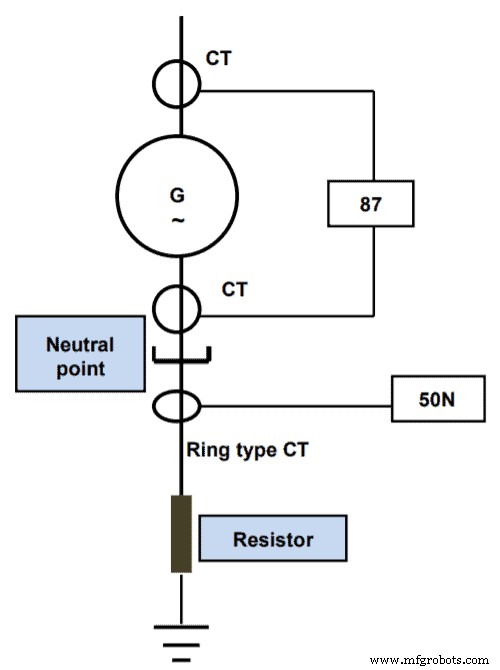
Perlindungan gangguan ground atau earth stator bergantung pada grounding stator. Untuk sistem grounding resistansi relay arus berlebih yang terhubung ke “ring type” CT di dalam koneksi netral atau relay tegangan di terminal resistansi dapat digunakan.
Di bawah kondisi sehat normal tidak ada arus yang mengalir melalui resistansi dan tegangan di terminal adalah sama dengan nol.
Untuk grounding melalui transformator sebuah relay tegangan yang memeriksa tegangan di resistansi yang terhubung ke sekunder transformator digunakan.
Di bawah kondisi sehat normal transformator grounding mengembangkan tidak ada tegangan sekunder, dan tidak ada tegangan yang diterapkan ke relay. Saat gangguan ground stator terjadi, tegangan dikembangkan di terminal sekunder transformator grounding, dan relay tegangan bekerja.
Gambar 1 menunjukkan koneksi khas untuk perlindungan diferensial stator dan earth-fault.
Gangguan singkatan pita rotor luka dilindungi oleh relay arus berlebih.
Pita rotor mungkin rusak oleh gangguan earth.
The rotor atau pita medan pada generator termal besar adalah ungrounded, thus a single ground fault produces no fault current.
A single ground fault, however, raises the potential of the whole field and exciter system, and the extra voltages induced by opening the field breaker, or the main generator breaker, particularly under fault conditions, may increase stress to the ground in the field, when the stator transients induce an extra voltage in the field windings. This extra voltage may cause a second fault on the field winding.
A second fault to ground may cause local heating of the iron which could distort the rotor, causing dangerous unbalance.
The protection against rotor earth-faults may be provided by a relay that controls the insulation of the rotor by applying an auxiliary AC voltage to the rotor or a voltage relay in series association with a high resistance (linear and non-linear resistors combination is the common method used nowadays) connected across the rotor circuit, the center point of which is connected to ground through the coil of a sensitive relay (ANSI/IEEE/IEC code 64).
Nowadays modern technique calls for the use combining linear and non-linear resistors.
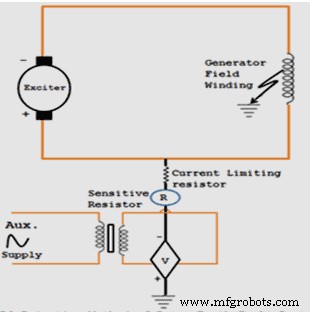
Gambar 2 menunjukkan contoh perlindungan earth fault rotor.
Perlindungan kehilangan medan menggunakan relay yang mendeteksi perubahan aliran daya reaktif. Skema perlindungan kehilangan stimulasi yang khas menggunakan relay Offset Mho (impedansi) untuk mengukur impedansi beban generator.
The Offset Mho impedance relay is a single phase relay, and is supplied from the generator CT and VT. The loss of field relay will operate if the value of the load impedance falls within the operating characteristic of the relay.
A timing relay is included to initiate tripping of the machine if the leading reactive power condition persists for 1 s (typical).
To prevent core saturation due to overexcitation during run up and shutdown an overexcitation protection (ANSI/IEEE/IEC code 59) is used.
Overexcitation can be explained by the following equation:
B = V / f
Where B is the magnetic flux density or magnetic induction or core flux (unit: tesla – T), V is the applied voltage (unit: volt – V) and f the frequency (unit: hetz – Hz).
For the core flux to remain below the saturation point, the generator voltage may only be increased as the frequency (or speed) is increased.
If the excitation is increased too rapidly, then this overexcitation condition must be detected, and the field breaker tripped.
Overexcitation protection schemes use Volts per Hertz relays.
These relays have a linear characteristic, and will operate if the voltage divided by the frequency exceeds the set value.
Stator windings and bearings overheating protection is usually performed by RTD and thermistor to monitor the temperature.
Stator phase unbalance protection commonly uses a time-inverse overcurrent relay, which is set in accordance with the maximum time rotor can withstand this overheating.
The function of generator negative phase sequence protection is to protect the machine against the overheating effects, namely at the rotor, which occur as a result of unbalance of the stator phase currents.
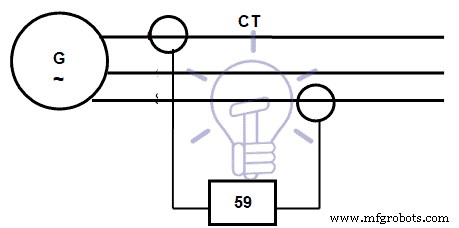
This protection uses a relay that compares the current at two phases through CT, as show in Figure 3.
Protections are set in accordance with the maximum time rotor can withstand this overheating and time is defined by the equation K = I2t (based in Joule law).
Typical curves for this condition is shown depend on the prime mover and are indicated by the manufacturer.
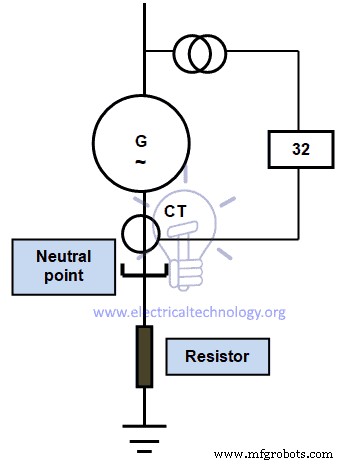
Reverse Power protection (ANSI/IEEE/IEC code 32) uses a power directional relay to monitor the generator load; the relay is supplied from the generator CT and VT as shown in Figure 4 and will operate when any negative power flow is detected.
Out-of-Step protection detects a condition caused by power system disturbances, rather than generator faults. The protection detects the condition when the generator slips its first pole, and causes the generator breakers to trip.
The turbine is not tripped enabling the machine to be re-synchronized after the system disturbance is cleared.
This protection can be considered complementary to Loss of Excitation protection.
The out-of-step condition occurs with the generator at full field and the loss of synchronism due to underexcitation occurs when the generator has no field.
Out-of-Step protection uses three impedance measuring relays. These relays are supplied by the generator CT and VT and measure the generator load impedance, detecting a power swing condition if the three relays operate in the correct sequence and will initiate tripping of HV circuit breakers.
For external short-circuit faults overcurrent relays are used (50; 50N; 51; 51N).
Under and over frequency protection (ANSI/IEEE/IEC code 81) detects also system disturbances, rather than generator faults. A major power system break-up can result in either an excess or insufficient generating power for the remaining connected load.
In the first case, overfrequency, with possible overvoltage results because of the reduced load demand. Operation in this mode will not produce overheating unless rated power and approximately 105% rated voltage are exceeded.
The generator controls should be promptly adjusted to match the generator output to the load demand.
With insufficient generation for the connected load, underfrequency is the result of heavy load demand.
The drop in voltage causes the voltage regulator to increase excitation. The result is that overheating can occur both in the rotor and the stator. At the same time, more power is being demanded, with the generator less able to supply it at the decaying frequency.
Automatic or manual transmission system load shedding should ideally adjust the load to match the connected generation before a total power system collapse occurs.
Over and under voltage relays (ANSI/IEEE/IEC codes 59 and 27) are used to control the voltage.
Phase supplementary start protection is provided to detect a condition where a fault exists when the generator is being run up to speed. Generators must not, of course, be started-up into a load or into a fault condition.
To prevent this, a scheme of protection is used that switches into service low-set overcurrent relays ONLY if the frequency is below 52 Hz on 60 Hz power systems and 42 Hz on 50 Hz systems.
Nowadays IED (see Section 2.1) that group all required protection functions are commonly used for generator protection.

About the Author: Manuel Bolotinha
-Licentiate Degree in Electrical Engineering – Energy and Power Systems (1974 – Instituto Superior Técnico/University of Lisbon)
– Master Degree in Electrical and Computers Engineering (2017 – Faculdade de Ciências e Tecnologia/Nova University of Lisbon)
– Senior Consultant in Substations and Power Systems; Professional Instructor



