Automasi Proaktif: Membangun Sel Pemesinan Robot Sebelum Permintaan
Sel pemesinan robot ini menghasilkan tabung untuk sistem bahan bakar otomotif. Temukan apa yang mencakup sel ini di Custom Tool di Cookeville, Tennessee, termasuk workholding, part dispenser, safety scanner dan parts collector.
Apakah Anda pernah membeli peralatan dengan mengetahui bahwa akan digunakan dengan baik pada akhirnya, tetapi pada saat itu tidak ada alasan untuk membelinya selain itu adalah sesuatu yang telah Anda amati? Saya memiliki kesempatan untuk mengunjungi bengkal mesin yang dapat menjawab ya atas pertanyaan ini dan sama sekali tidak menyesimi investasi. Faktanya, telah terjadi peningkatan throughput untuk satu pekerjaan pemesinan volume tinggi, dan tim automasi telah mempelajari keterampilan baru yang menurut mereka akan menguntungkan banyak proyek machine tending otomatis di masa depan.
Pada 2018, manajemen di Custom Tool Inc. (Cookeville, Tennessee) penasaran dengan teknologi yang asing bagi anggota tim. Meskipun bengkal tidak asing dengan otomatisasi memiliki sel las otomatis, mereka tidak memiliki pengalaman dengan self-integration dari robot machine tending. Oleh karena itu, dengan satu tujuan untuk mempelajari integrasi robot untuk pekerjaan di masa depan di mana otomatisasi mungkin bermanfaat, tim membeli robot arm dan mengambil waktu untuk terbiasa dengan cara memprogramnya, menambahkan komponen end-effector dan menghubungkannya dengan mesin perkakas.
Proyeksi tim terbukti tidak hanya bijak tetapi tepat waktu. Tidak lama setelah investasi robot, bengkal mesin menerima pesanan yang menurut tim akan mendapatkan manfaat dari otomatisasi. Visi manajemen akhirnya divalidasi ketika proyek otomatisasi ini berjalan lebih dari efisien, memberikan konsistensi yang lebih baik, penghematan waktu, peningkatan throughput dan kemampuan untuk menempatkan operator di mesin perkakas lain di lantai bengkal di mana otak manusia diperlukan.
Was it Luck or Fate?
Beberapa orang mungkin mengatakan detail cerita ini terlalu rapi sehingga bengkal harus "beruntung." Namun, kutipan "you make your own luck" berbunyi di sini. Bob Young, vice president Custom Tool, dan adiknya serta president perusahaan, Gillen Young, selalu mencari peluang otomatisasi. Oleh karena itu, untuk mengatakan cerita yang akan saya ceritakan ini adalah keberuntungan adalah berlebihan. Namun seseorang dapat menyimpulkan bahwa bintang-bintang teratur bagi bengkal, meskipun beberapa rintangan menunggu tim dalam perjalanan self-integration robot mereka.
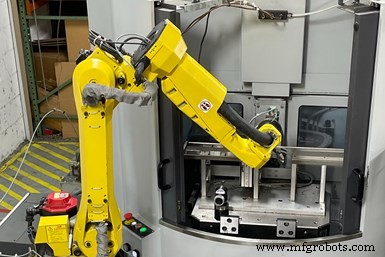
Sel pemesinan robot ini terdiri dari robot FANUC M-10 enam sumbu yang merawat Hardinge Bridgeport V480 VMC. Otomatisasi menghilangkan sebagian besar elemen interaksi manusia, meskipun pemantauan operator masih diperlukan. Setup ini membebaskan operator untuk melakukan pekerjaan lain yang diperlukan di lantai bengkal di Custom Tool.
Meskipun Custom Tool belum melakukan self-integration robot sebelum 2018, perusahaan, yang terutama melayani pasar penerbangan angkasa, pertahanan, medis dan otomotif, mulai mengotomatisasi ketika menambahkan bar feeder ke CNC turning center yang ada di lantai bengkalnya pada 2008. Sejak itu, perusahaan telah menjadi percaya besar pada lights-out machining pada banyak mesinnya. Selain itu, it
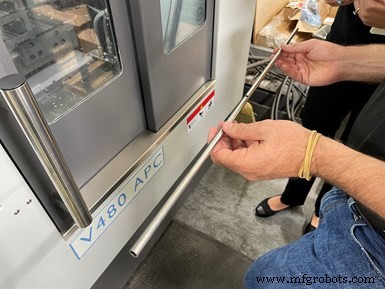
Tim automasi Custom Tool harus tetap fleksibel, karena mereka belajar bahwa spesifikasi pesanan bagian dapat berubah dengan cepat. Sel mesin robot awalnya menghasilkan tabung 27 inci panjang dengan lubang 5,5 mm di satu sisi, tetapi kemudian pelanggan mengubah pesanannya menjadi tabung 34 inci. Juga, bengkal diberitahu bahwa lubang tidak boleh ada burr setelah mereka telah mulai memproduksi pesanan.
telah mengotomatisasi beberapa rutinitas pengukuran untuk berbagai bagian yang diproses malam hari serta pengumpulan data (lihat sidebar) untuk strategi perencanaan log produksi sendiri. Meski sebagian besar pekerjaan bengkal melibatkan bagian dengan diameter 2 inci dan lebih kecil, terkadang mereka mencabang untuk memenuhi kebutuhan pelanggan. Misalnya, mereka juga memiliki sel las robotik yang awalnya dibeli untuk menyelesaikan pekerjaan perbaikan tertentu untuk pelanggan.
Proyek otomatisasi berikut hadir ketika bengkal menerima pesanan dari supplier ke perusahaan otomotif tier 1 untuk bor tabung stainless steel untuk sistem bahan bakar otomotif pada 2018. Bob Young dan tim automasi, dipimpin oleh manufacturing manager perusahaan dan Clay Adcock, Emerging Leader Production Machining 2020, memutuskan bahwa robot yang dibeli mereka awal tahun itu hanya untuk mempelajari cara mengintegrasikannya dapat dihubungkan pada vertical machining center untuk menciptakan sel yang sempurna untuk pesanan bagian volume tinggi yang telah mereka terima. Tim memesan Hardinge Bridgeport V480 APC VMC dengan pallet changer untuk dipasangkan dengan robot FANUC M-10 yang telah dibeli sebelumnya. Robot, menurut mereka, akan cocok untuk memuat dan membuang workpiece untuk aplikasi ini yang memerlukan konsistensi.
Meskipun ide sel otomatisasi ini tampaknya menjadi solusi, mempelajari detail-detail sel bukan proses yang cepat atau mudah. Kurva pembelajaran baru dimulai untuk tim, diikuti oleh coba dan kesalahan. Namun, hasilnya layak atas usaha; manajemen tidak akan melakukannya dengan cara lain.
Self-Integration Process and Challenges
Setelah VMC diterima, memakan waktu sekitar delapan bulan bagi tim automasi Custom Tool untuk memahami proses integrasi dengan robot FANUC dan menjalankan sel sesuai kebutuhan untuk memenuhi persyaratan bagian pelanggan. Namun, selama periode pembelajaran, perusahaan masih harus memenuhi pesanan yang terdiri dari bor lubang 5,5 mm di satu sisi tabung stainless steel dengan diameter 3/8 inci yang panjang 27 dan 34 inci, dengan volume hingga 250.000 bagian per tahun.
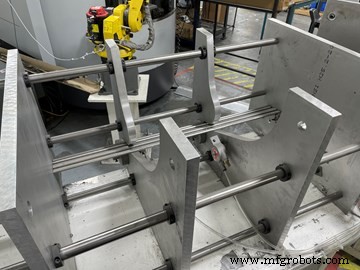
Sistem membutuhkan presentasi bagian yang tepat dari "toothpick dispenser" yang dirancang dan dibuat Custom Tool. Bin memiliki sensor yang memberi tahu kontrol ketika bin sedang kosong.
Oleh karena itu, operator memuat dan membuang VMC secara manual selama waktu itu, yang menyelesaikan pekerjaan, tetapi tidak seefisien otomatisasi yang terbukti nanti. Setelah proyek self-integration selesai, dan sel otomatisasi berjalan, manajemen menyadari peningkatan konsistensi dan peningkatan throughput sebesar 20%.
"Kami melakukan banyak pelacakan angka, bukan karena kami mencoba menjadi Big Brother, tetapi kami hanya mencoba belajar dari sudut itu," Young menjelaskan. "Dan kami menghargai kerja keras yang dilakukan operator di depan mesin-mesin ini, tetapi itu adalah pekerjaan fisik. Bahkan dengan upaya terbaik mereka, kami masih tidak bisa melihat konsistensi yang kami peroleh dari aspek otomatisasi." Dia menggambarkan konsistensi baru yang disediakan otomatisasi "seperti jam."
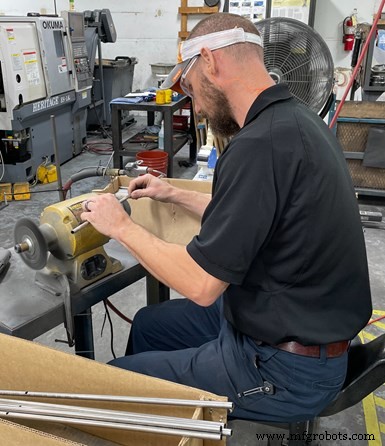
Operator Andy Paul membersihkan lubang dalam tabung stainless steel setelah keluar dari sel pemesinan robot. Bagian akan digunakan dalam sistem bahan bakar otomotif.
Sistem membutuhkan presentasi bagian yang tepat dari apa yang Young sebut dengan antusias "toothpick dispenser." Bin aluminium yang dirancang dan dibuat tim Custom Tool meratakan tabung untuk memudahkan robot mengambilnya. Robot kemudian memuat tabung pada fixture di pallet di luar zona pemesinan VMC, sementara VMC membor tabung yang difixtur di pallet lainnya.
Setelah semua tabung di pallet di dalam mesin dibor, pallet changer berputar untuk membawa bagian selesai keluar dari mesin dan workpiece baru masuk ke dalam mesin. Robot kemudian mengambil setiap bagian selesai, melepasnya dari fixture dan menempatkannya dalam bin bahan saat mesin mulai membor workpiece baru. Dari sana, setiap bagian selesai diperiksa dan dibebani burr, kemudian dipindahkan ke pack out.
Meskipun tugas robot terdengar sederhana, Young mengatakan timnya menemukan beberapa hambatan besar untuk integrasi yang tepat: fixturing, presentasi bagian kepada robot dan pemrograman PLC sel.
Hambatan ini dapat dan telah diatasi tetapi mengetahui tantangan sebelumnya dapat membantu. Dia mengatakan gerakan terkecil dari fixture dapat menyebabkan robot tidak menangkap bagian dengan baik. Juga, presentasi bagian untuk robot penting, tetapi tidak mudah dilakukan dengan presisi, seperti yang diharapkan robot. Setiap detail kecil dari proses harus dipertimbangkan, katanya. Misalnya, bagaimana robot mendapatkan material dan kemudian apa yang dilakukan robot dengannya ketika selesai.
Untuk PLC, Young menjelaskan bahwa pembelian perang lunak dan memahami cara kerjanya adalah tugas yang besar juga.
Choosing the Right Equipment
Saat Young mulai mencari end-of-arm tooling, dia dan timnya memutuskan untuk menggunakan sistem gripping yang dioperasikan listrik dari Schunk Inc.
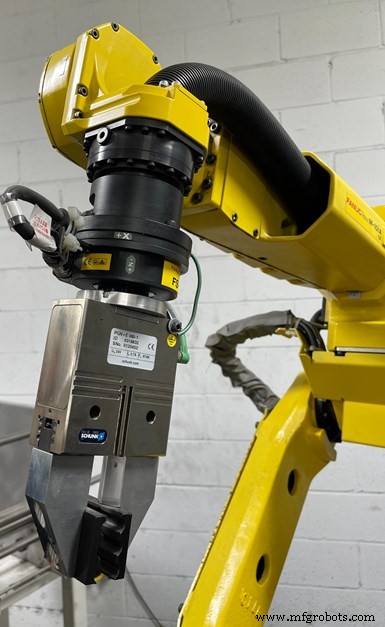
Custom Tool menggunakan sistem gripping yang dioperasikan listrik dari Schunk Inc. daripada sistem pneumatik. Meskipun ada kelebihan dan kekurangan dari setiap tipe, Bob Young percaya versi listrik adalah pilihan yang lebih cerdas untuk bengkal.
versus a pneumatic one. Although there are pros and cons to each type, he believes the electrical version was the smarter choice for Custom Tool. The fact that an electrically actuated system requires fewer accessories was attractive because his goal was to keep the configuration as straightforward as possible. For example, the FANUC M-10 with electrically actuated gripping he describes as being “clean” with only a few cables, whereas a pneumatic system needs an airline, which complicates configuration.
The M-10 is a six-axis robot that is designed specifically for small work cells and can lift up to 12 kg. Young purchased the robot with a force sensor, which he highly recommends. Force sensors enable robots to detect force and torque applied to the end effector. This provides it with an almost human sense of touch. Surprising to Young and his team, the force sensor was not difficult to set up and use.
“We thought the force sensor would be one of the more challenging aspects, but it was fairly straightforward,” he says. “Sometimes we need to get over the barrier of what we think is not going to work.”
After the robot purchase and the order came in, it was time to search for the right machine tool for the job. The Hardinge Bridgeport V480 APC VMC was attractive to Young because of its pallet changing system that maximizes spindle uptime.
“It wasn’t about the size of the machine that was the driving force because we mostly make parts you can hold in the palm of your hand,” Young explains. “It was the ability of the machine to continue to cycle, index and process. It makes a very predictable process and great for scheduling and planning.”
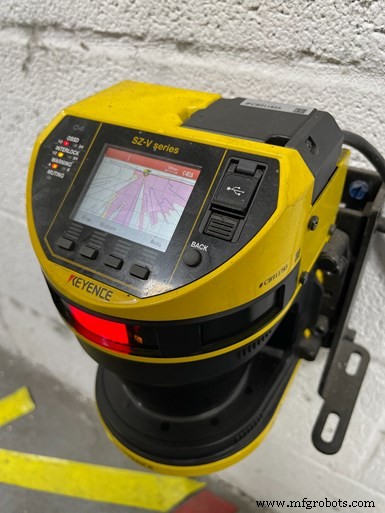
The Keyence SZ-V Series area scanner offers a 27.56-ft. protection zone around the robot machining cell at Custom Tool. It delivers impressive sensitivity that has been known to sense a moth flying through the area that caused the robot to shut down.
Once the robot/machine tool cell was integrated, the robot was initially caged. But realizing there were better options for ease of use and machine access, the automation team decided to invest in a Keyence SZ-V Series area scanner as an alternative, after about a year of using the cage.
Young explains that the scanner was one of their best purchases because it saves space and time that it took to turn off the robot, open and close the cage door, and it generally improves the machining environment.
Also, the scanner’s sensitivity is impressive to the team. Young was astonished when he witnessed the robot shutting down one day after a moth flew into the scanner’s zone.
The Young brothers understand the importance of collecting data from their machine tools, too. So, when they implemented this cell, they also implemented MT Connect as the interface for gathering information from it feeds into their production log planning system.
Benefits of Self-Integration
Because of the time, skills and labor it takes to self-integrate a robotic cell, one might question why Custom Tool chose to go the “hard” route instead of hiring an integrator to do this challenging work. Young describes the dedication of doing the integration internally as an investment in future projects and a way to gain machining intelligence. He not only strives for the team to be able to self-integrate more robots for future jobs on the shop floor, but he says their do-it-yourself approach has forced them to get very familiar with the machines and robots, and understanding what is inside the control panel, including M codes and how all the components function together.
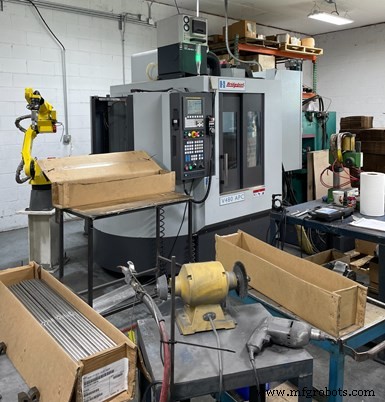
Although some of Custom Tool’s equipment runs lights out, Young decided not to run this robotic machining cell lights out. That's because the order is run using the customer’s material. Therefore, if there is a mistake during lights out that causes scrap, the company risks wasting the customer’s material.
Alternatively, if the company chose to work with a robot integrator, there is still a learning curve, Young explains. Along with considerations for integrating that the management would be a part of as well as the pains and challenges of learning about the equipment, once the integration is signed off it is the shop’s job to keep the cell up and running. Therefore, they figured it was worth their energy to take their time and self-integrate to know all systems inside and out. This option saves money on hiring an outside integrator.
As Custom Tool continues to grow and invest in capital equipment, Young only purchases machine tools that come with a robot interface to make it easier to integrate a robot when the opportunity presents itself again.
Prepared for Growth
With a full intention to grow the automation segment of Custom Tool, Young now feels that his business is prepared to take on more of these jobs because of his recent investments in machines with robot interfaces. “If the machine is ready, we just need to program the robot and figure out material handling,” Young says. “We’re already set up to make an integration.” He adds that, at his shop, he never knows what job might be coming next.
Having an automation mindset means that the company is always looking at automation as a possibility for any order. In fact, Young says he fully expects that if the job trends he is seeing now continue, in 12 months from now he will be talking about another integration project.
With the self-integrated cell now well established, the company can run it 14 to 16 hours a day, five days a week, with only light operator tending to monitor the job. Will the team reach its goal to run the cell 18 to 20 hours a day? That is dependent on the material availability from the customer.
Custom Tool Inc. | 931-432-6609 | customtoolinc.com
Harding Inc. | 800-843-8801 | hardinge.com
FANUC America | 800-477-6268 | fanucamerica.com
Automated Data Collection System Compiles Info Every 20 Minutes
Custom Tool’s automated data collection and reporting system developed by company president, Gillen Young, uses a web-based, Industrial Internet of Things (IIoT) platform to pull data from machines that have agents for the open-source MTConnect communication protocol as well as the company’s JobBoss enterprise resource planning (ERP) software. The platform is Devicewise for Factory from Telit, a company that offers IIoT modules, software and connectivity services and software.
Gillen says the benefits of this system are that it interfaces with a variety of controllers and no custom programming is needed for data collection. It is configured to automatically pull all data that was previously collected manually from the machine (part count, machine code and more) as well as ERP data (job number, job description, order date, order quantity, delivery date and so on) and stores it in the cloud. Data is accessible via a web dashboard. Reports can then be created to more graphically show what was previously available in the production log spreadsheet.
The system has been collecting data every 20 minutes since early June 2018 without missing an entry for a machine that was running. Three turning centers and one mill are currently connected. Another mill still requires an MTConnect agent to be installed before it can be connected. Gillen says there are many good machine monitoring products available. However, his technical background afforded an opportunity to explore an in-house solution that addresses the business information the shop is most interested in knowing. He also feels this data-collection capability might also lead to even more advanced analytics, such as tying cut time to specific types of cutting tools or inserts.



