Cetak Investasi Titanium: Teknik Utama, Manfaat, dan Wawasan Ahli
Titanium adalah logam yang dihargai karena rasio kekuatan-kepadatan yang tinggi, resistensi korosi, dan resistensi suhu. Meskipun titanium adalah salah satu elemen yang paling banyak ditemukan secara alami di planet, ia mahal untuk dipisahkan dari elemen lain ke dalam bentuk logam fundamentalnya. Titanium mudah bereaksi dengan oksigen, yang menciptakan lapisan oksidasi untuk perlindungan korosi yang ditingkatkan dalam produk jadi; namun, karakteristik yang sama ini membuatnya sulit untuk diproduksi menjadi produk logam. Faktanya, proses tertentu harus digunakan untuk mencegah ia dari paparan dan bereaksi dengan elemen lain.
Karena properti uniknya, titanium sering digunakan untuk membuat bagian penerbangan, medis, dan industri, serta produk konsumen dan barang olahraga. Salah satu metode paling umum untuk membuat produk titanium adalah cetak investasi. Cetak investasi titanium dapat menghasilkan bagian yang sangat detail dan kompleks dengan permukaan halus dan kebutuhan minimal untuk pekerjaan finishing. Blog ini memeriksa proses cetak investasi titanium, properti cetakan titanium, dan rentang penggunaan yang luasnya.
Apa Itu Cetak Investasi?
Cetak investasi adalah proses serbaguna yang digunakan dengan berbagai bahan untuk membuat komponen yang rumit dengan finishing permukaan halus. Karena sifat reaktif yang sangat tinggi dari titanium, cetak investasi dengan logam ini memerlukan modifikasi pada proses keseluruhan. Cetak investasi titanium mengikuti langkah-langkah dasar ini:
- A pattern of the desired part is created from easily melted wax or resin.
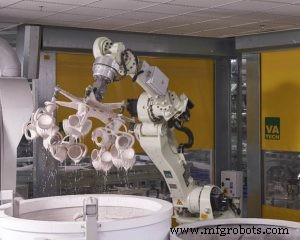
- The pattern is coated with multiple layers of a temperature resistant ceramic. in a temperature resistant material, usually ceramic. For titanium investment casting, standard ceramic molds are not viable, as melted titanium will react with the ceramic. Therefore, the mold used for titanium must be made from special ceramics, such as zirconium oxide or yttrium oxide.
- Once the ceramic shell mold is complete, the wax is melted and drained, leaving a hollow mold.
- Titanium is melted using induction or arc melting processes in a water cooled copper crucible in a specialized heating apparatus that prevents exposure to other elements, especially nitrogen and oxygen.
- The melted titanium is poured into the ceramic mold. Centrifugal processes aid in the filling of thin walls.
- The titanium freezes into a solid upon contact with the ceramic mold, thereby creating the desired component.
Properties & Advantages of Titanium Castings
Titanium offers numerous distinct advantages over other metals, including:
- Lightweight Strength: It exhibits the highest strength-to-density ratio of any metal, for lightweight strength and durability.
- Corrosion Resistance: When exposed to oxygen, titanium reacts, creating a thin layer of titanium oxide on the surface of the metal. This layer protects the titanium surface from corrosion and rust that could affect other metals such as steel and aluminum.
- Durability: Titanium is extremely durable, so it is more resistant to wear and tear, and enhances the service life of equipment in which it is used.
- Temperature Resistance: Titanium has an extremely high melting point, and exhibits minimal creep when exposed to temperature fluctuations. This makes it particularly valuable for aerospace and industrial components that require exposure to extreme temperatures.
Titanium Casting Applications
The unique properties of investment cast titanium parts make them particularly useful in a wide range of industries and applications. The most common include:
- Aerospace Industry: Titanium appears in rotating and static components in aircraft engines including compressor blades, rotors, and nacelles, as well as in structural applications, frames, landing gear, and hydraulic components.
- Military and Defense Sectors: Titanium can withstand extreme forces and is corrosion resistant, making it ideal for military and defense applications that include aircraft and submarines, armored weaponry, missiles, tank armor, and battlefield tanks.
- Medical Industry: Due to its high strength-to-weight ratio and biocompatibility with the human body, titanium is the number one metal for use in biomedical applications and appears in reconstructive pins, hip and knee implants, pacemaker cases, dental implants, and prosthetics. It is also used for surgical instruments, wheelchairs, and crutches.
Other industries and applications where titanium casting is found include pharmaceutical and chemical production, oil and gas, marine, automotive, transportation, construction, and consumer products and sporting goods.
Although titanium is versatile, the purification and production processes make it more expensive to manufacture than some other metals, like aluminum and steel.
Titanium Investment Casting Services at Impro
With more than two decades of experience in specialty investment casting, Impro offers the highest quality investment casting services for an array of industries and applications. Our titanium investment casting facilities are specially designed to ensure superior quality titanium castings at competitive prices. Have any additional questions or want to get started with titanium investment casting? Reach out to us today.



