Pengecoran Logam Dijelaskan: Jenis, Manfaat, Tahapan & Aplikasi
Dalam artikel ini, Anda akan mempelajari apa itu pengecoran logam? dan bagaimana prosesnya dilakukan, tahapan pengecoran logam, dan jenis dari proses pengecoran logam.
Proses Pengecoran Logam
Proses pengecoran logam adalah metode pembuatan tertua dan populer untuk mendesain bentuk yang diinginkan. Ini adalah langkah pertama dalam pembuatan sebagian besar produk.
Cor dibuat dari logam apa pun yang dapat dilelehkan dan dapat memiliki bentuk apa pun yang diinginkan desainer. Cor dapat diproduksi dalam ukuran yang berkisar dari beberapa mm hingga beberapa meter. Cor dapat berat dari beberapa gram hingga ton.
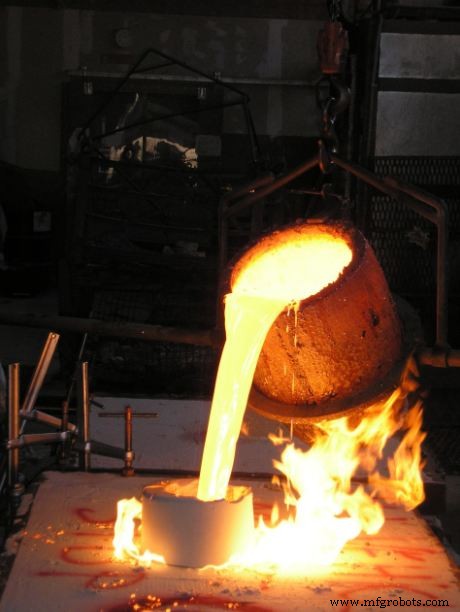
Produk dengan bentuk yang sangat kompleks, bagian berongga, rongga internal kompleks, dan permukaan lengkung tidak teratur dari logam yang sulit untuk di-machine dapat dengan mudah diproduksi oleh proses cor.
Baca juga: Heat treatment of steel Mengapa Ini Faktor Penting Dalam Manufaktur
Banyak proses cor tersedia dan pilihan proses untuk memproduksi bagian tertentu bergantung pada faktor-faktor seperti biaya produksi, tingkat produksi, ukuran, bentuk, dan finishing permukaan. Proses cor berbeda satu sama lain dasarnya dalam jenis bahan yang digunakan untuk persiapan cetakan dan metode penuangan material cair.
Bahan cetakan umumnya pasir atau logam dan metode penuangan dapat menggunakan gravitasi, vacuum, tekanan rendah atau tinggi. Cor paling sering digunakan untuk membuat bentuk kompleks yang sulit atau tidak ekonomis untuk dibuat dengan metode lain.
Proses cor modern dibagi menjadi dua kategori utama:
- Expendable
- Non-expendable casting.
Dalam expendable casting, ini mencakup sand casting, shell casting, plaster mould casting, investment casting, dan evaporative-pattern casting.
Dalam non-expendable casting, ini mencakup permanent mould casting, dies casting, semi-solid metal casting, centrifugal casting, continuous casting.
Keuntungan Proses Pengecoran Logam
- Biaya yang terlibat dalam proses cor sangat rendah dibandingkan proses manufaktur lainnya.
- Bagian yang sangat berat dan besar yang sulit dibuat dari metode manufaktur lainnya dapat diproduksi oleh proses ini.
- Cor dapat digunakan untuk mass production maupun batch production.
- Produk dapat dicor sebagai single piece sehingga metal joining process dihilangkan.
Classification of Metal Casting Process
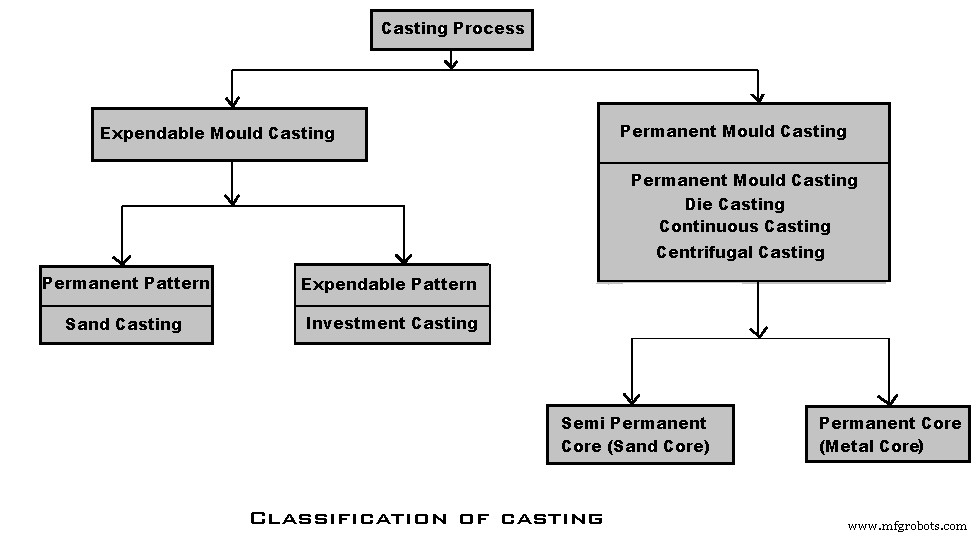
- Modern casting process subdivided into two main categories: expendable dan non-expendable (Permanent) casting.
- Ketika mould digunakan untuk single casting, terbuat dari pasir. Moulds seperti itu disebut expandable moulds karena mereka dihancurkan saat making out of casting.
- Ini digunakan untuk production of smaller quantities.
- Ketika mould digunakan repeatedly, terbuat dari metal atau graphite dan disebut permanent mould.
Jangan Lewatkan: Apa saja jenis Unconventional Machining Process? [PDF]
Types of Metal Casting Process
Berikut adalah empat jenis berbeda metal casting processes yang digunakan untuk large-scale production:
- Sand casting
- Investment casting
- Permanent mould casting
- Pressure die casting
1. Sand Casting
Itu adalah most extensively dan widely used types of metal casting process. Ini adalah expendable mould-permanent pattern casting process. Sand casting process melibatkan penggunaan furnace, metal, pattern, dan sand mould.
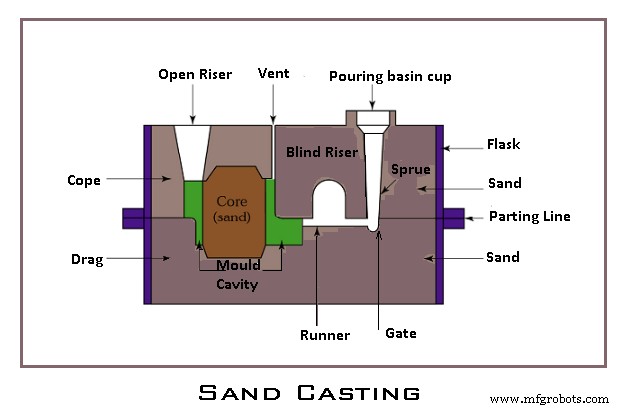
Hand ramming of sand around pattern digunakan untuk simple casting. Untuk complicated castings, sand mixture compacted oleh moulding machines. Moulding machines not only increase production cost tetapi juga improve quality of casting by improving application dan distribution of forces for ramming.
Itu dapat digunakan untuk all types of metals tapi surface finish dan dimensional accuracy not good compared with other casting processes. Itu adalah most economical production process.
Advantages of Sand Casting
- Almost any metal can cast.
- It has no limit on size dan shape.
- Low equipment cost.
- Less expensive for low volume production.
Disadvantages atau Limitations of Sand Casting
- Coarse finish.
- Dimensional accuracy is not good.
- Still finishing required untuk casting.
- It has a low production rate.
2. Investment Casting
The sequence of operations dalam shell investment casting is given below:
- Fabrication of a master pattern: The master pattern made using material seperti wood atau plastic.
- Fabrication of master dies: A die dapat cast out of low melting point metal using master pattern. steel atau wooden dies digunakan.
- Preparation of wax patterns: Wax patterns made by pouring molten wax into die. After wax solidified, it taken out of die.
- Assembly of wax patterns: Depending upon size of casting several wax patterns assembled together dalam bentuk tree atau cluster dengan central spruce dan runners.
- Coating of a cluster: The cluster now coated dengan thin layer of refractory material. This step performed by dipping whole cluster into thin slurry of very fine refractory material mixed with hydrolyzed ethyl silicate, alcohol dan a gelling agent.
- Producing a final layer of refractory material: Here coated cluster dipped repeatedly dalam relatively coarsely ground refractory material untuk achieve desired thickness coating.
- Hardening of coating: Coated cluster left out untuk drying dan hardening untuk some time (few hours).
- Melting of wax patterns: The mould placed in oven upside down dan wax allowed to flow out of mould which collected untuk reuse.
- Preheating the mould: The fired at 700-1000°c untuk impart strength ke mould dan ensure flow of molten metal to all intricate dan thin sections.
- Filling the hot mould: Molten metal filled in mould by gravity, vacuum pressure atau force.
- Cleaning of casting: spruce dan runners now removed dan casting cleaned dan finished.
Advantages of investment casting
- Almost any metal can be cast,
- Good surface finish.
- Good dimensional accuracy.
- Fairly high production rate.
- Complex shapes can be cast.
- Low finishing cost.
Disadvantages atau limitations of investment casting
- High labour cost.
- Expensive mould dan pattern.
- Limitation on part size.
3. Permanent Mould Casting
There are so many permanent mould casting processes, a few of them listed below:
- Gravity-feed permanent mould casting
- Low-pressure permanent mould casting
- Die casting
- Centrifugal casting
- Continuous casting
Dalam proses ini, a mould digunakan repeatedly. Mould generally on two halves dan designed untuk easy opening dan closing. Ejector pins provided untuk removal of solidified casting. Metallic mould is not permeable’ therefore’ clearance along parting planes dan ejector pine serve sebagai vents untuk escape of gases.
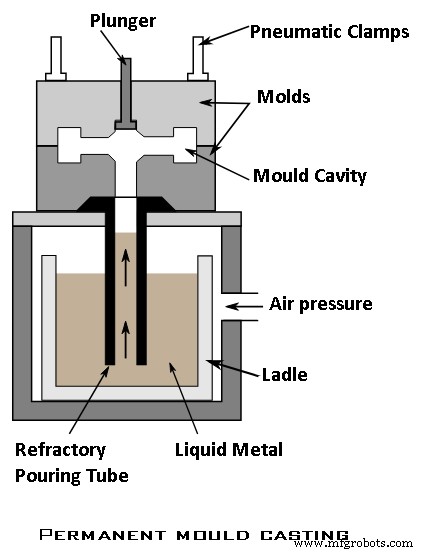
The refractory coating on thinner walls of mould not only increases mould life tetapi juga prevents sticking of casting pada mould walls.
Preheating of mould dan controlled cooling of mould through water circulation maintain uniform mould temperature. Permanent with other processes used untuk casting low melting point, non-ferrous materials using alloy steel moulds.
In comparison with other processes’ better surface finish dan dimensional accuracy obtained in this process. The initial cost high, so these processes economical only when higher production volumes required.
Advantages of permanent mould casting
- Good surface finish.
- Good dimensional accuracy.
- High production rate.
Disadvantages atau limitations of permanent mould casting
- High mould cost.
- It is suitable for high volume production.
- Suitable for casting of simple shapes.
- Suitable for low-melting-point metals.
4. Die casting
Die casting is a very commonly used type of permanent mould casting process. It is used untuk production of many components of home appliances seperti stoves, fans, motors, dan toys, etc.
The surface finish dan tolerance of die-cast parts so good that almost no post-processing required. Die casting mould expensive dan require significant lead time untuk fabricate; mereka commonly called dies.
There are two common types of die casting:
- Hot chamber die-casting
- Cold-chamber die casting.
4.1 Hot Chamber Die Casting Process
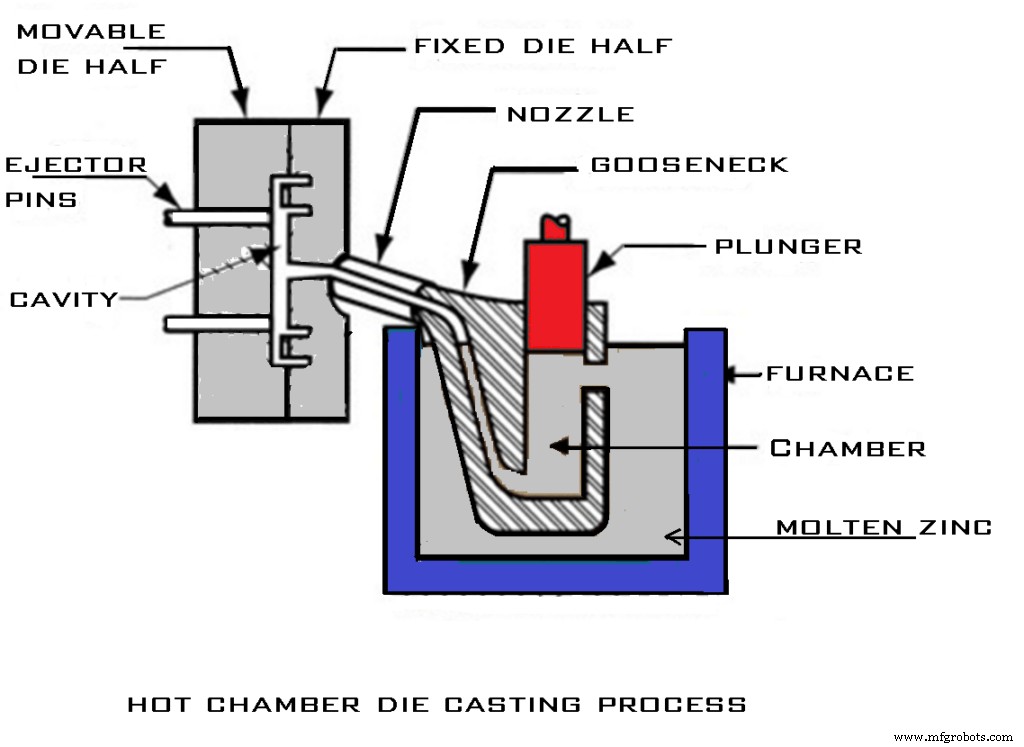
In a hot chamber process (used for zinc alloys magnesium) the pressure chamber connected to die cavity filled permanently with molten metal.
The basic cycle of operation is as follows:
- Die is closed dan gooseneck cylinder filled with molten metal.
- The plunger pushes molten metal through gooseneck passage dan nozzle dan into die cavity: metal held under pressure until it solidifies.
- Die opens dan cores, jika ada, retracted; casting stays in ejector die; plunger returns, pulling molten metal back through nozzle dan gooseneck.
- Ejector pins push casting out of ejector die. As plunger uncovers inlet hole, molten metal refills gooseneck cylinder.
The hot chamber process used for metal that (a) have low melting points dan (b) do not alloy with die material, steel; common examples are tin, zinc, dan lead.
4.2 Cold Chamber Die Casting Process
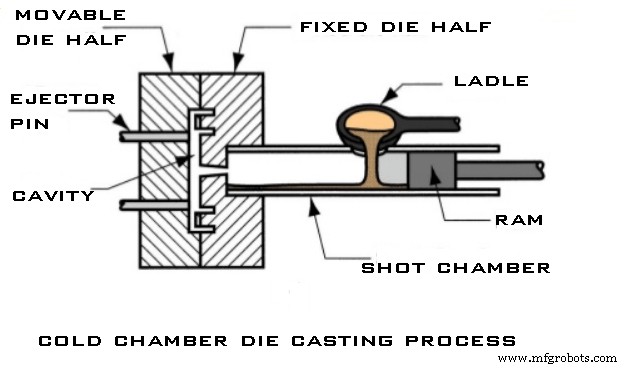
In a cold chamber process, molten metal poured into cold chamber in each cycle. The operating cycle is
- Die is closed dan molten metal ladled into cold chamber cylinder.
- The plunger pushes molten metal into die cavity; metal held under high pressure until it solidifies.
- Die opens dan plunger follows untuk push solidified slug from cylinder if there are core, they retracted away.
- Ejector pins push casting off ejector die dan plunger returns ke original position.
This process particularly useful untuk high melting point metals such as Aluminium, dan Copper (and their alloys).
Advantages of die casting
- Excellent surface finish.
- Excellent dimensional accuracy.
- High production rate.
- Complex shapes can be cast.
- Little or no finishing cost.
Disadvantages atau limitations of die casting
- The high cost of die.
- Limited to casting of non-ferrous metals.
- Limitation on part size.
You Might Like: Apa saja jenis Welding Defects? Their Causes dan Remedies [PDF]
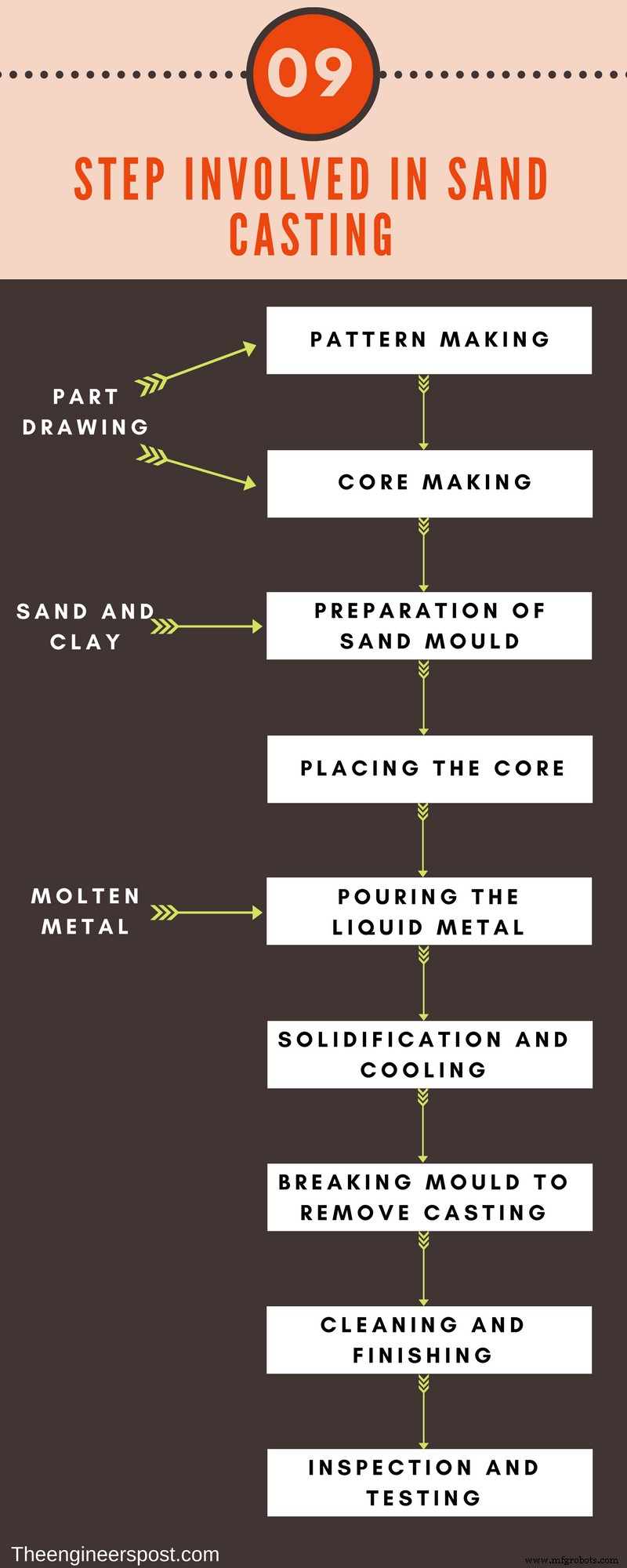
Stages of Metal Casting Process
The following are metal casting process of producing casting,
- Pattern making
- Moulding dan Core making
- Melting dan Casting
- Fettling
- Testing dan inspection.
The first stage done outside foundry shop dan rest four stages within foundry shop.
1. Pattern Making
- In pattern making, patterns designed dan prepared as per drawing of casting received dari planning section dan according to moulding process.
- The materials of pattern selected based on factors such as number of castings requires dan surface finish desired in casting.
- It is a skilled trade related to trades of tool dan die making dan mould making tapi juga often incorporates elements of fine woodworking.
- The materials used for pattern making are wood, metal atau plastics.
2. Moulding dan core making
- The patterns sent to moulding stage, in which moulds prepared either in sand atau material with help of pattern so that a cavity of desired shape produced.
- To get hollow portion, cores prepared in core boxes. Moulds dan cores then baked to impart strength dan finally assembled for pouring.
- The moulding can be done either by hand atau dengan help of machines.
- Proper mould design dan arrangement for flow of molten metal very important untuk production of sound castings.
3. Melting dan casting
- The metal of correct composition melted in suitable furnace.
- Molten metal now taken in ladles dan poured into moulds.
- The moulds then allowed to cool so that molten metal in mould solidifies.
- Casting then taken out by breaking moulds dan they sent to cleaning section.
4. Fettling
- The casting sent to fettling section where unnecessary projections, adhering sand removed, dan entire surface made clean dan uniform.
- Some castings required heat treatment also, which done during this state only
5. Testing dan Inspection
- The inspector test dan inspect casting before dispatching dari foundry to ensure that it is flawless dan conforms to desired specifications.
- If any defects found in casting, then they have been completely rejected.
Baca juga: List of Mechanical Properties That Every Mechanical Engg Should Know
Itu saja, terima kasih telah membaca. Jika Anda suka artikel ini silakan bagikan dengan teman-teman Anda. Jika Anda memiliki pertanyaan tentang “jenis metal casting process” Anda bisa tanya di komentar.
Langganan newsletter kami untuk mendapatkan notifikasi artikel baru:



