Menguasai Pembuatan Giraf dan Pemasangan Insert dalam Cetakan 3D: Praktik Terbaik
Ada satu hal fundamental yang perlu Anda ketahui tentang pembuatan giraf dan pemasangan insert ke dalam bagian cetakan 3D: Apa yang bisa dan tidak bisa Anda manufaktur tergantung pada properti material dari bagian dan insert. Hal kedua yang perlu diingat: Menguntungkan untuk merancang untuk standar taps dan insert jika memungkinkan.
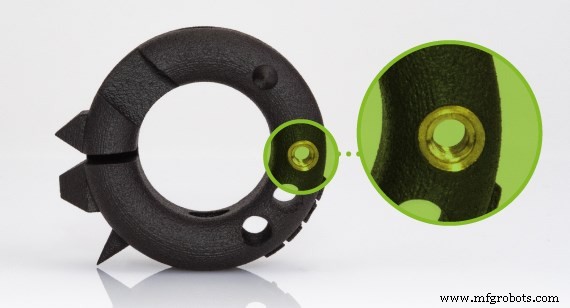
Brass heat-set inserts are possible for components built with SLS and MJF.
Bagian SLS dan MJF dengan Heat-Set Inserts
Bagian nylon yang dicetak menggunakan proses sintering laser selektif (SLS) atau Multi Jet Fusion (MJF) dapat memanfaatkan ukuran standar brass heat-set inserts. Mengapa brass? Brass adalah logam lunak dengan suhu pengawetan rendah. Sebelum insert brass ditempatkan ke dalam lubang, mereka dipanaskan cepat dengan soldering iron. Ini merubah bentuk nylon sehingga mengalir dan mengisi rongga di sekitar insert, memberikan pegangan yang kuat di sekitar insert setelah pendingin. Menggunakan brass heat-set insert dalam desain Anda juga dapat membantu memastikan daya tahan. Jika Anda membutuhkan heat-set insert yang berbeda dari brass, insert yang terbuat dari aluminium atau stainless steel juga adalah opsi.
Kekuatan Heat-set Insert dalam Bagian SLS dan MJF
Kami telah melakukan beberapa pengujian kekuatan tarik internal pada heat-set installasi di nylon, dan inilah yang dapat Anda harapkan. Sementara banyak variabel terlibat, insert yang lebih besar dan lebih panjang yang memiliki luas permukaan lebih besar lebih kuat daripada yang lebih kecil. Pengujian kami menunjukkan beban maksimum yang berkisar dari sekitar 100 pon untuk insert yang sangat kecil hingga, dalam beberapa kasus, lebih dari 700 pon untuk insert terbesar kami. Itu memberi Anda beberapa perasaan tentang keterbatasan, tetapi kami merekomendasikan menguji fungsionalitas untuk aplikasi spesifik Anda, terutama jika bagian Anda akan melihat beban tiba-tiba, berulang, dan/atau tidak seragam. Penting juga untuk mengetahui bahwa insert yang lebih panjang/tinggi dengan ukuran giraf yang setara lebih kuat daripada insert yang lebih pendek. Jumlah kekuatan tambahan bervariasi menurut ukuran insert, tetapi pengujian kami menunjukkan bahwa insert tinggi menambahkan sekitar 30% kekuatan tarik dibandingkan dengan insert yang lebih pendek.
Bagian SLA dengan Press Fit Inserts
Gaya insert berbeda untuk bagian yang dicetak menggunakan proses stereolithography (SLA). Dalam hal ini, press fit inserts standar digunakan. Mereka tidak memerlukan pemanasan untuk dipasang. Alih-alih, press fit inserts ini diperkuat dengan epoksi untuk kekuatan dan keamanan tambahan.
Tapping SLA, SLS, MJF Parts
Pembuatan giraf lubang pada plastik cetakan 3D kurang umum daripada pemasangan insert. Dalam kasus Anda, tapping mungkin lebih disukai daripada insert jika menjaga estetika yang konsisten sangat penting atau jika properti logam tidak diinginkan. Kami menyediakan ukuran tap standar, tetapi jika ada yang Anda butuhkan, cukup tanyakan. Berikut adalah daftar heat-set inserts, press fit inserts, dan taps yang biasa kami stok. Kami dapat bekerja dengan Anda untuk memastikan kedalaman yang tepat dipilih.
Stocked Inserts and Tap Sizes
| Stocked Heat-Set Inserts for Nylon Parts | Stocked Press Fit Inserts for SLA Parts | Taps Sizes Available for SLA Parts | Taps Sizes Available for Plastic Parts |
| STANDARD | METRIC | NPT |
| 0-80 | 0 - 80 | 0 - 80 | M1.2 x .25 | 1/16 - 27 | 2-56 |
| 2-56 | 2 - 56 | 1 - 64 | M1.4 x .25 | 1/8 - 27 | 4-40 |
| 4-40 | 4 - 40 | 1 - 72 | M1.6 x .35 | 1/4 - 18 | 6-32 |
| 6-32 | 6 - 32 | 2 - 56 | M2 x 0.4 | 1/2 | 8-32 |
| 8-32 | 8 - 32 | 3 - 48 | M3 x 0.5 | 3/8 - 18 | 10-24 |
| 10-24 | 10 - 24 | 3 - 56 | M4 x 0.7 | | 10-32 |
| 10-32 | 10 - 32 | 4 - 40 | M5 x 0.8 | | 1/4"-20 |
| 1/4"-20 | 3/8 - 16 | 4 - 48 | M6 x 1.0 | | 1/4"-28 |
| M1.6 x 0.35 | 1/4 - 20 | 5 - 40 | M8 x 1.0 | | 5/16"-18 |
| M2 x 0.4 | 5/16 - 18 | 6 - 32 | M8 x 1.25 | | 3/8"-16 |
| M2.5 x 0.45 | M1.6 - .35 | 6 - 40 | M12 x 1.75 | | 1/8"-27 |
| M3 x 0.5 | M2 - 0.4 | 8 - 32 | M14 x 1.0 | | 1/2"-13 |
| M4 x 0.7 | M2.5 - 0.45 | 8 - 36 | M18 x 1.0 | | M2 x 0.40 |
| M5 x 0.8 | M3 - 0.5 | 10 - 24 | M20 x 1.5 | | M2.5 x 0.45 |
| M6 x 1 | M3.5 - 0.6 | 10 - 28 | | | M3 x 0.50 |
| M8 x 1.25 | M4 - 0.7 | 10 - 32 | | | M3.5 x 0.60 |
| | M5 - 0.8 | 12 - 24 | | | M4 x 0.70 |
| | M6 - 1.0 | 1/4 - 20 | | | M5 x 0.80 |
| | M8 -1.25 | 1/4 - 28 | | | M6 x 1.00 |
| | | 3/8 - 16 | | | M8 x 1.00 |
| | | 3/8 - 18 | | | M8 x 1.25 |
| | | 3/8 - 24 | | | M10 x 1.00 |
| | | 5/16 - 18 | | | |
| | | 5/16 - 24 | | | |
| | | 7/16 - 20 | | | |
| | | 7/16 - 14 | | | |
| | | 1/2 - 12 | | | |
| | | 1/2 - 20 | | | |
| | | 3/4 - 16 | | | |
| | | 5/8 - 18 | | | |
| | | 9/16 - 18 | | | |
| | | 15/16 - 16 | | | |
Designing for Tapping and Inserts in Plastic 3D-Printed Parts
When determining the type and size of tap or inserts you will need, be sure to provide us with technical drawings that clearly indicate thread size, pitch, and depth requirement. When designing for heat-set inserts, be sure to follow the guidelines in the table below for best fit. While we can’t guarantee size of fit or depth of inserts, we do ensure they are flush with the surface of the part. In some cases, we have built custom jigs for certain customer requirements.
Design Requirements for Heat-Set and Press Fit Inserts:
- Minimum Wall Thickness: 0.030 in. (0.762mm)
- Minimum Distance to Adjacent Features: 0.250 in (6.35mm)
- Maximum Height of Adjacent Features: 4.0 in. (101.6mm)
Chasing vs. Tapping Threads in Metal 3D-Printed Parts
If you are after functional threads for a metal prototype, you should model and print the structure of the threads. After the build, that helical structure can be chased with a hand tap to ensure functionality. This is functional enough for many non-precision applications, and it’s a lot cheaper and faster because it negates the need for a full machining setup. Some customers opt to chase threads themselves, but we can do it for relatively little cost. The downside to self-chasing threads is that the alignment and quality of the threads won’t be as precise. If you have an odd orientation on your printed threads, that could lead to a very minor loss of final positional accuracy or alignment. For this reason, if your part has a production design requirement, it is recommended that the final threads are machined post-build to ensure accuracy. Machined threads can hold much tighter tolerances. Of note, when selecting materials, chasing threads in Inconel 718 and cobalt chrome is difficult as these metals are harder than the tap itself. This makes small threads especially difficult in these two materials.
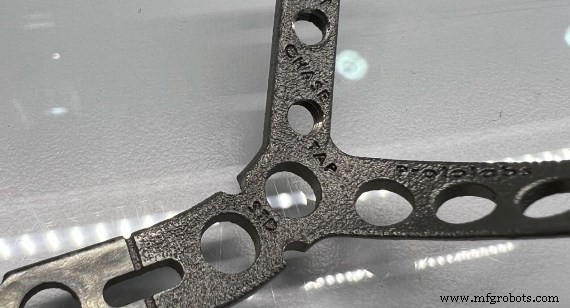
Here is an actual part highlighting the differences in precision you can expect with a printed, chased, and tapped thread.
Advantages of Chasing or Tapping for Metal Parts
| | Chasing Threads | Tapping Threads |
| Faster Lead Time | ✔ | |
| Economical Pricing | ✔ | |
| Functional Prototype | ✔ | |
| Precision Part | | ✔ |
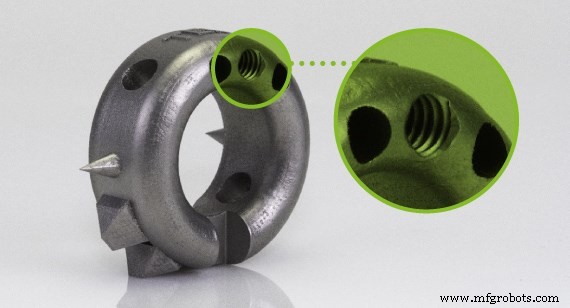
Threading is possible in metal 3D-printed parts, but it can be challenging to chase threads in parts built in Inconel and cobalt chrome materials.
Designing for Tapping and Inserts in Metal 3D-Printed Parts
When you get your parts quoted, it’s important to provide all the necessary thread information on the technical drawings. We can review any technical drawings for quote that clearly indicate thread size, pitch, class of fit, and position requirement.
Special Request Inserts and More
So, that’s an overview of how we typically accommodate 3D printing customers. That said, if you’ve got an out of the box design request, don’t shy away from asking us. You can always ship us the inserts you would like us to use, or we can order them for you. We can even source larger inserts for larger parts. Need dowel pins assembled? We have you covered. Just ask. We always review your part with your design requirements in mind. And don’t forget that our applications engineers are here to help guide you through lead time, cost analysis, and design goals when it comes to threading and inserts in 3D-printed parts.
Rachel Hunt is the service line manager for 3D printing at Protolabs.



